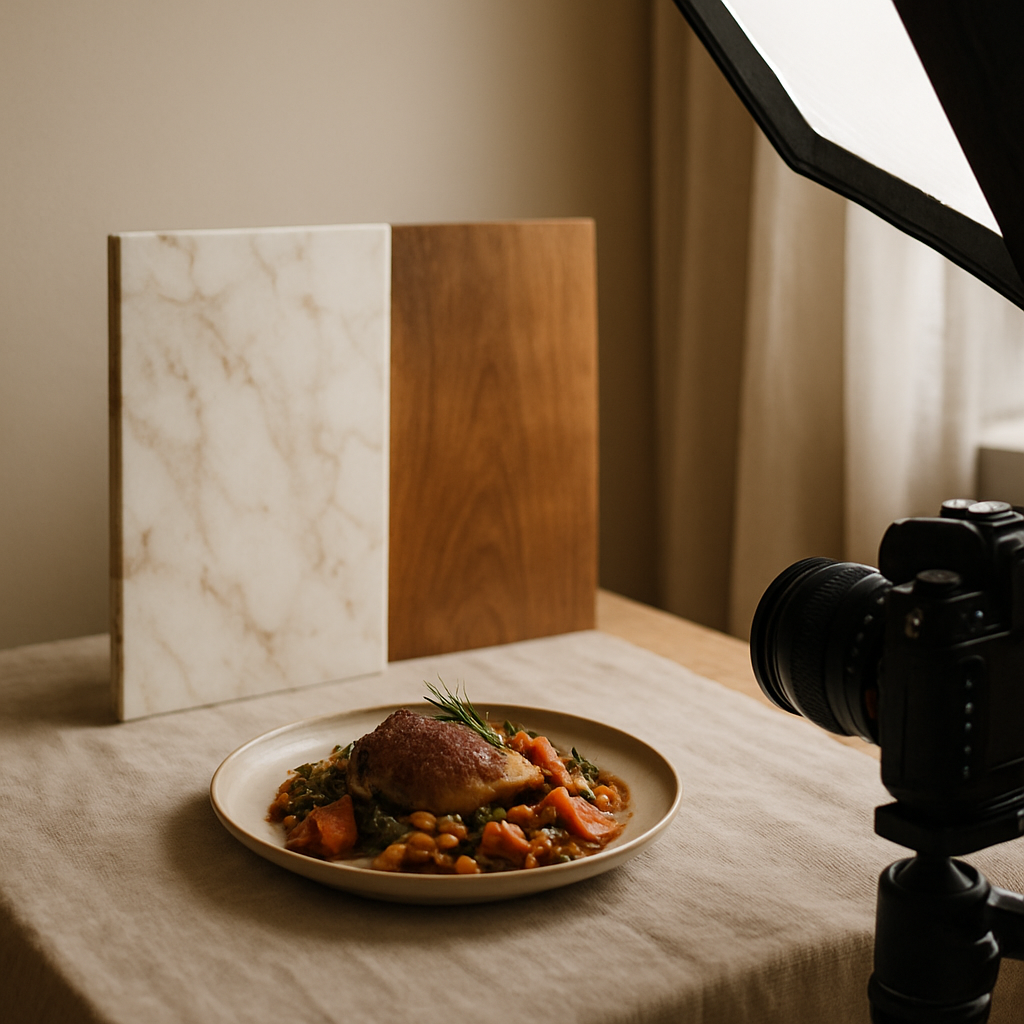
If your dishes look great but don’t convert on delivery apps, the issue is often the surface beneath them. The right food photography backdrops — marble, wood, and linen — do more than look pretty; they set mood, shape perceived value, and make colors pop at a glance. For teams without in-house photo resources, FoodFix streamlines this work by producing consistent, studio-grade looks in minutes, letting you scale images for menus, Glovo, Uber Eats, and Just Eat without a full shoot.
How to choose food photography backdrops
Before you pick a surface, map the backdrop to brand, cuisine, and channel.
- Brand positioning: Luxury or casual? Marble quietly signals premium; wood reads warm and honest; linen suggests lifestyle and freshness.
- Cuisine cues: Bright salads prefer cool marble or pale wood; grilled mains love darker wood; pastries shine on softly wrinkled linen.
- Color contrast: Choose a backdrop that contrasts the hero color of the dish so edges stay crisp in thumbnails.
- Texture control: High texture (rustic wood, wrinkled linen) adds story but can distract; low texture (polished marble) is cleaner and safer for crowded menus.
- Maintenance and speed: Think about cleanup, repeatability, and how quickly you can shoot a set.
- Platform consistency: Delivery apps crop hard. Keep a repeatable background so tiles look like a cohesive brand line.
Marble: clean luxury without glare
Marble is the backdrop equivalent of white sneakers: crisp, modern, and versatile. It boosts perceived value and keeps attention on color and plating.
When marble works best:
- High-acid, colorful plates (citrus bowls, poke, salads) where white and gray veins provide gentle structure.
- Minimalist brands that favor clean lines and negative space.
- Menus with mixed cuisines that still need a unified look.
Pro tips:
- Choose tone thoughtfully: Cool white marble flatters greens and reds; warmer cream marble suits pastries and stews.
- Manage reflections: Side light at a low angle keeps highlight lines slim; a simple diffuser softens specular glare on glossy sauces.
- Add depth with props: Thin slate coasters, a metal fork, or a sprig of herbs can ground the frame without crowding it.
- Keep it believable: Visible veining should be subtle so it doesn’t pattern-match across shots and look artificial.
What to avoid:
- Busy veining that competes with drizzle lines or noodle shapes.
- Overexposed whites that wash out pale foods like gnocchi or ricotta.
Wood: warmth and credibility
Wood signals comfort and craft. It can read farmhouse, bistro, or modern, depending on tone and grain.
Common choices:
- Pale oaks or painted boards: Airy and Scandinavian; great for brunch, smoothies, and plant-forward bowls.
- Mid-tone boards: Balanced and adaptable to most menus.
- Dark walnut or stained planks: Moody, steakhouse vibes; excellent for char, caramelization, and rich sauces.
Pro tips:
- Match grain to plate size: Loud grain can dwarf small plates; tight grain keeps focus.
- Angle matters: Shoot across the grain for leading lines that pull the eye to the dish.
- Control color cast: Warm wood can shift whites toward yellow; set custom white balance or add a neutral bounce card.
- Clean realism: A few knife marks say “real kitchen,” but keep them subtle so they don’t suggest wear or hygiene issues.
What to avoid:
- Orangey varnishes that tint food.
- Boards so rustic they feel costume-like, unless that’s the brand.
Linen: softness and lifestyle cues
Linen brings a tactile, human note to the frame. It’s great for bakery, brunch, and any item that benefits from softness and approachability.
When linen works best:
- Breads, pastries, and butter-forward dishes that love matte surroundings.
- Pasta, risotto, and warm bowls where a gentle fold breaks stiff edges.
- Seasonal specials and editorial banners where storytelling matters.
Pro tips:
- Color palette: Natural, off-white, or sage are safe; charcoal adds drama without stealing color.
- Wrinkle with intention: Light, directional crumples add depth; avoid deep creases near the hero edge.
- Layer smartly: Linen over wood adds warmth while hiding busy grain.
- Keep it clean: Steam or spritz light wrinkles; lint roll between plates to prevent crumbs turning into noise.
What to avoid:
- Pure white linen under powdered sugar or flour — it can clip highlights fast.
- Overstuffed folds that read messy on small delivery thumbnails.
Mini case study: a bistro’s three-backdrop system
A mid-market bistro needed one look across in-house menus and delivery apps while keeping differentiation between categories. Starters and salads went on cool marble for brightness; mains moved to mid-tone wood for depth; desserts landed on soft, natural linen for warmth. The team first tried DIY boards but struggled with evening consistency and glare on sauces. They switched to FoodFix to standardize the marble–wood–linen set across new items without reshooting everything, and the marketing manager reported faster approvals, consistent thumbnails, and fewer retouches from week to week.
Lighting and workflow tips
Consistent lighting makes any backdrop work harder. Keep a simple playbook so every dish lands in a predictable lane.
Lighting positions:
- Side light (3 or 9 o’clock): Adds texture to crusts and greens, excellent on wood and linen.
- Back/side light (10–11 or 1–2 o’clock): Gives specular pop to glazes on marble while preserving plate detail.
- Diffusion: A basic diffuser or thin curtain evens highlights, especially on polished surfaces.
Color and exposure:
- Lock white balance: Pick a Kelvin value and stick with it across the set to keep wood tones from drifting.
- Expose to protect highlights: Especially critical on marble and white plates.
- Add a negative fill: A small black card on the shadow side sculpts shape on pale foods.
Framing rules:
- Leave breathing room: Delivery crops vary; keep a margin so plates don’t touch the frame edges.
- Repeat angles: A consistent 25–45° angle across a category helps tiles read as a collection.
- One hero per frame: Props should never compete for focus or scale.
Production shortcuts:
- Build a shot list by category and assign a backdrop per category before you start.
- Pre-style garnishes to avoid melting, wilting, or pooling on set.
- Keep microfiber cloths, a small brush, and tweezers to spot-clean surfaces between plates.
DIY vs AI: getting consistent backdrops at scale
If you shoot a handful of dishes monthly, a small kit of real marble, a reversible wood board, and a couple of neutral linens can cover most needs. But when you’re updating menus weekly or mirroring sets across delivery platforms, manual shooting becomes a bottleneck. FoodFix is built to remove that friction: it renders reliable marble, wood, or linen looks, matches lighting across shots, and outputs menu-ready images in seconds at predictable costs (from €1.5 per shot, €45/month Pro with 30 photos, or a €225 full-menu package) with a 99‑second turnaround. When you’re ready to standardize your look without a studio day, try FoodFix.
FAQ
Which backdrop should I use for most of my menu?
If you must choose one, start with a light marble or pale wood. Both are versatile, keep colors honest, and survive aggressive delivery-app cropping. Add linen for desserts and brunch to introduce softness without overhauling your setup.
How do I avoid glare on glossy sauces over marble?
Soften the light with diffusion and push the key light slightly to the side so the primary reflection falls off the plate. A small bounce card on the shadow side preserves detail without flattening the dish.
Can I mix backdrops within one shoot and still look consistent?
Yes — define a rule by category (e.g., starters on marble, mains on wood, desserts on linen) and lock angle, light position, and color balance. With FoodFix, you can keep that rule set while generating new dishes on demand.
Are darker wood surfaces risky for delivery thumbnails?
They can be if the food is also dark. Keep contrast in mind: caramelized items often pop on mid-tone wood or light marble. If you love dark wood, brighten sauces, add a light napkin, or use a white plate to separate layers.
What’s the fastest way to scale images for Glovo, Uber Eats, and Just Eat?
Shoot or generate a single master composition with clean margins, then export per platform. Keep a consistent backdrop per category so tiles read as a series. FoodFix simplifies this by delivering uniform lighting and background treatments across batches so you spend less time on manual retouching.